Headspace — Sleep Mood
Role
Lead Researcher
Timeline
Jan 2024 - Mar 2024
Type
Student Project: UX Design
Team
3 members
Context & Problem
Headspace users struggle with inconsistent sleep routines that undermine overall wellness. Sleep affects mood, focus, and motivation—yet the app lacked a dedicated feature addressing this connection. This was an opportunity to create a sleep-focused experience within the existing ecosystem.
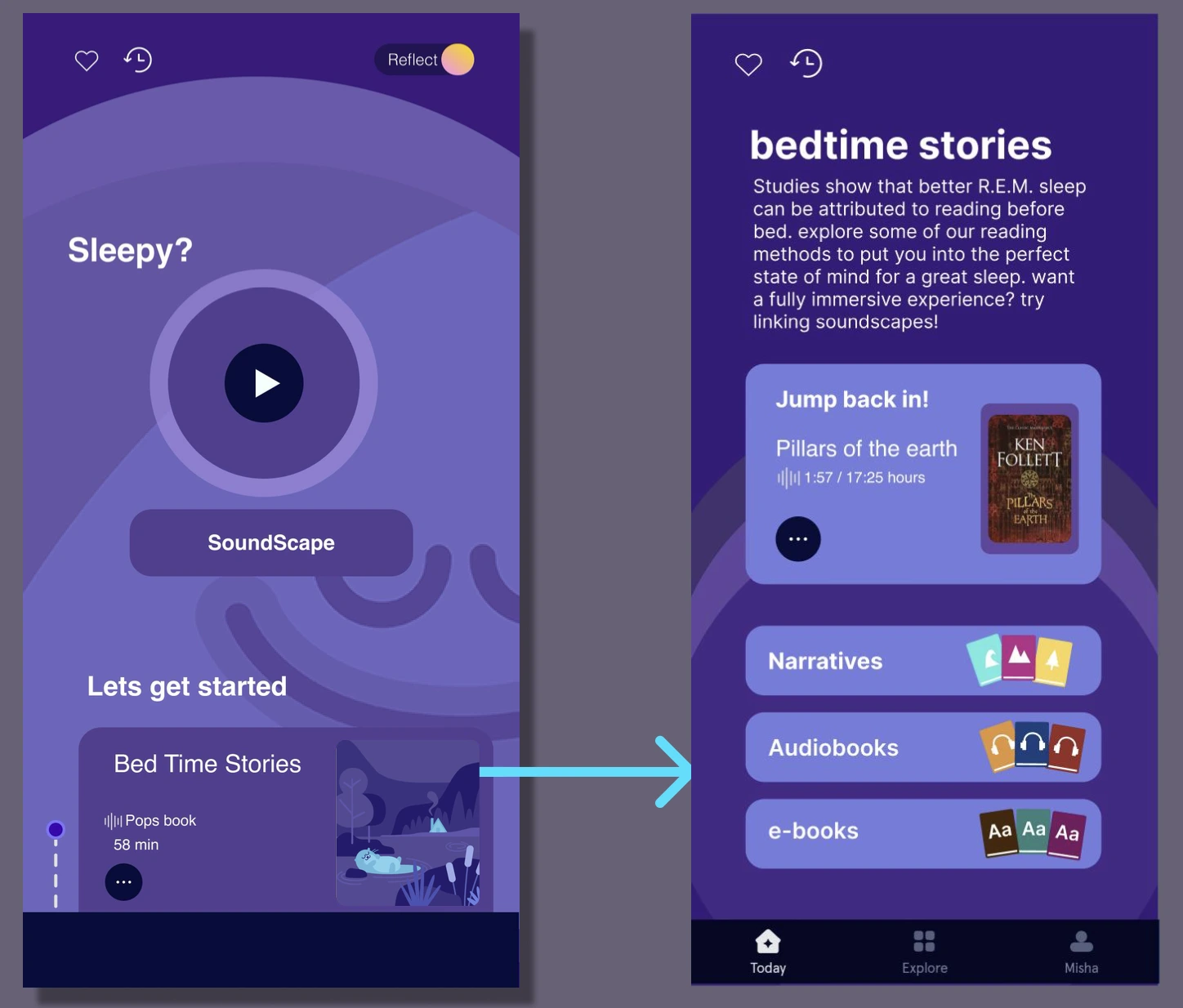
Bedtime Stories interface - multi-sensory engagement with stories, soundscapes, and audiobooks
Research & Insights
Three semi-structured interviews revealed: users value simplicity and personalization, many associate good sleep with reduced stress, and they prefer human-guided support over AI-only interactions. Key insight: Sleep is a pivotal but under-served dimension of mental wellness that could increase both perceived effectiveness and daily engagement.
"If I can't sleep I'll usually like read or write in a journal or something. That kind of helps."
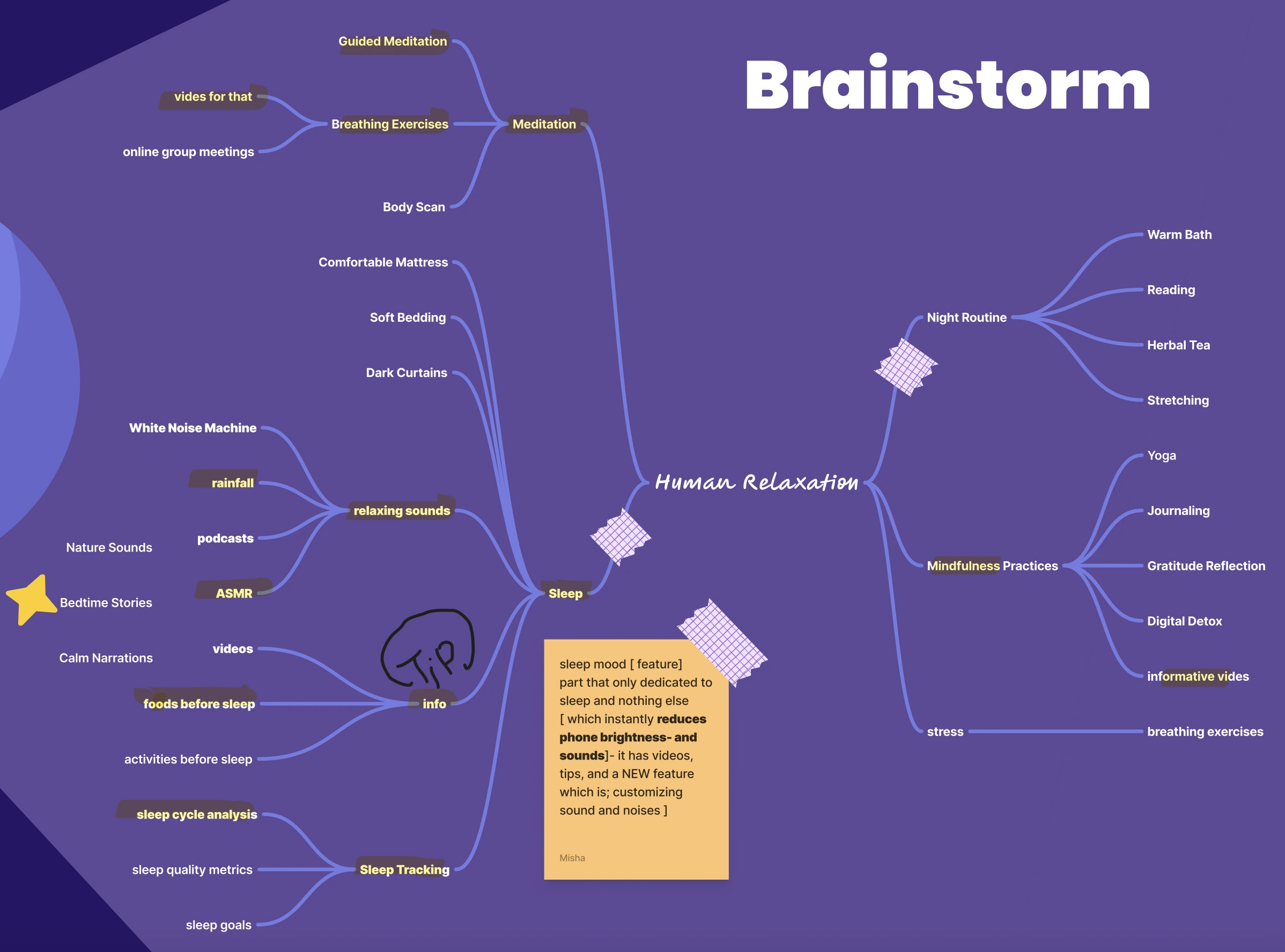
Collaborative brainstorm - synthesizing research into core Sleep Mood features
Ideation & Architecture
We brainstormed three concepts: Sleep Mood, Fresh Air Mode, and AI Mindfulness Guide. Affinity mapping prioritized Sleep Mood for universal relevance. Core components: customizable soundscapes, narrated bedtime stories, science-backed sleep videos, and progress tracking. Sleep Mood automatically softens the UI (reduced brightness, cooler tones) to signal mental transition into rest.
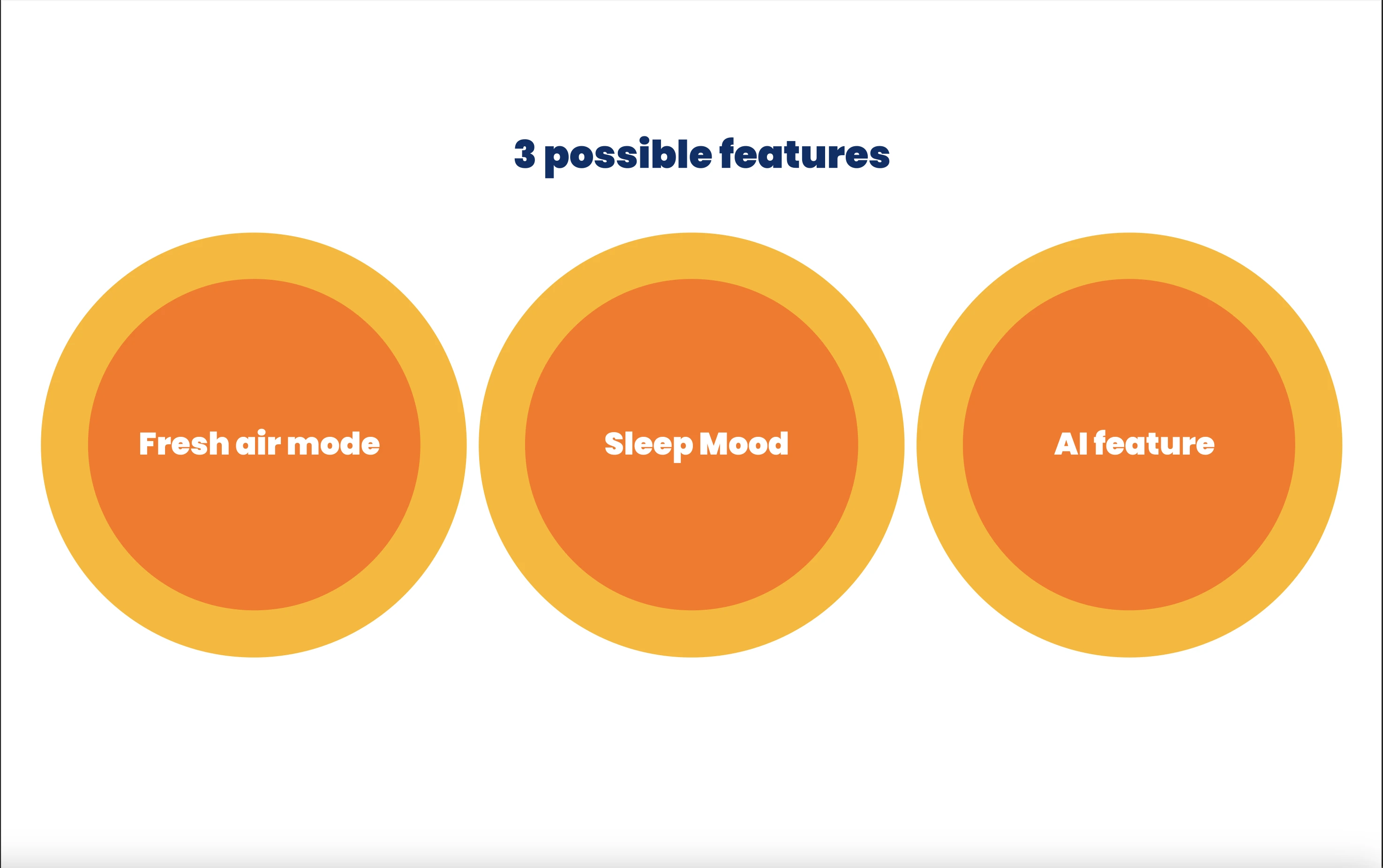
Ideation workshop - Fresh Air Mode, Sleep Mood, and AI Feature concepts
Design Evolution
Wireframes refined the Sleep Mood activation flow, simplifying redundant navigation into a single toggle. Visual hierarchy emphasized calm immersion over information density. Accessibility priorities: large tap targets, high-contrast typography for night-time readability, and consistency with Headspace's brand identity.
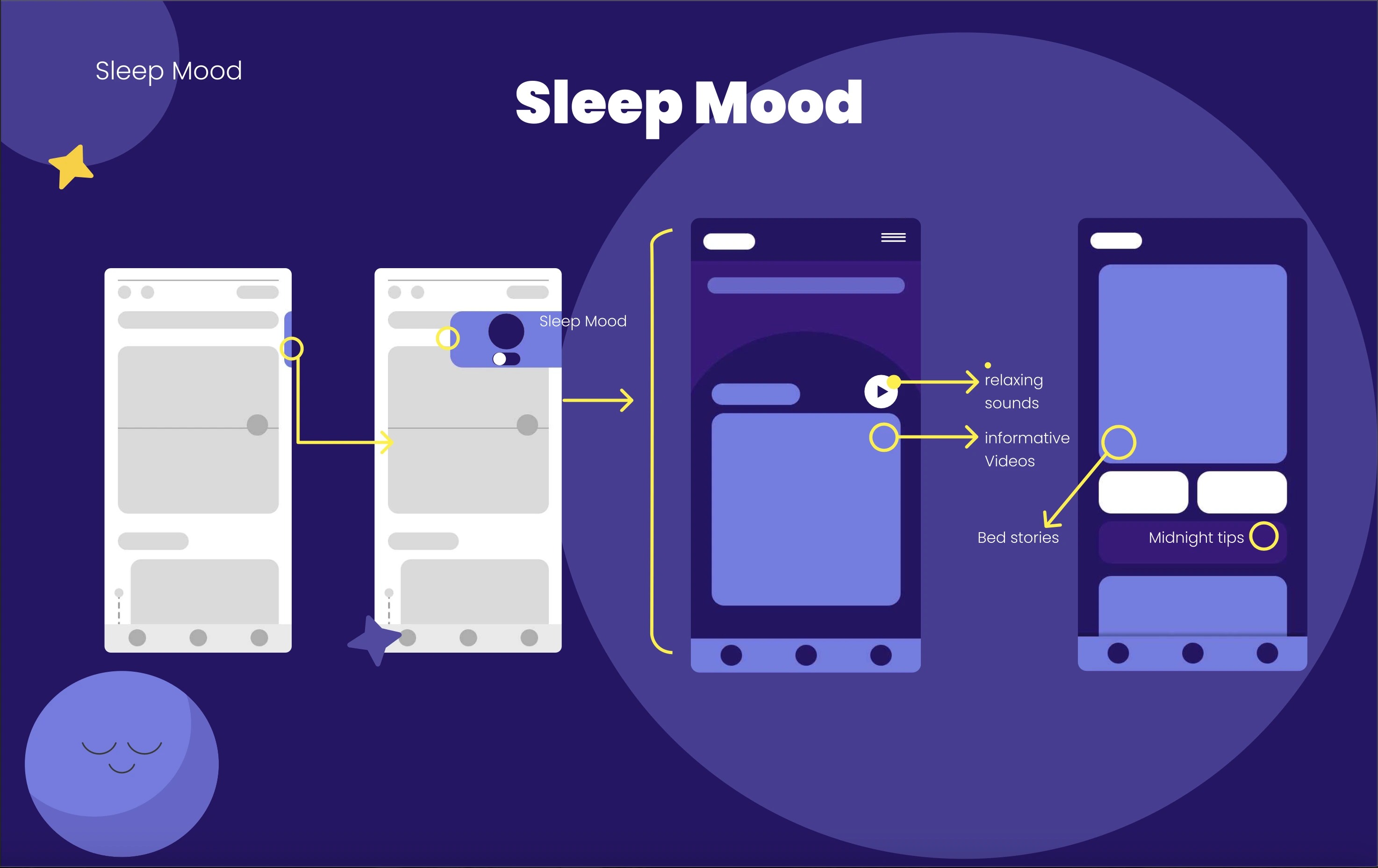
Design evolution - Sleep Mood activation, content selection, and playback flows
Final Concept
Sleep Mood transforms Headspace into a serene night-time companion. Key features: calm interface shift, multi-sensory engagement (soundscapes, stories, videos), gentle progress prompts, and emotional framing through the persona "Emma Taylor," a marketing professional with irregular work hours.
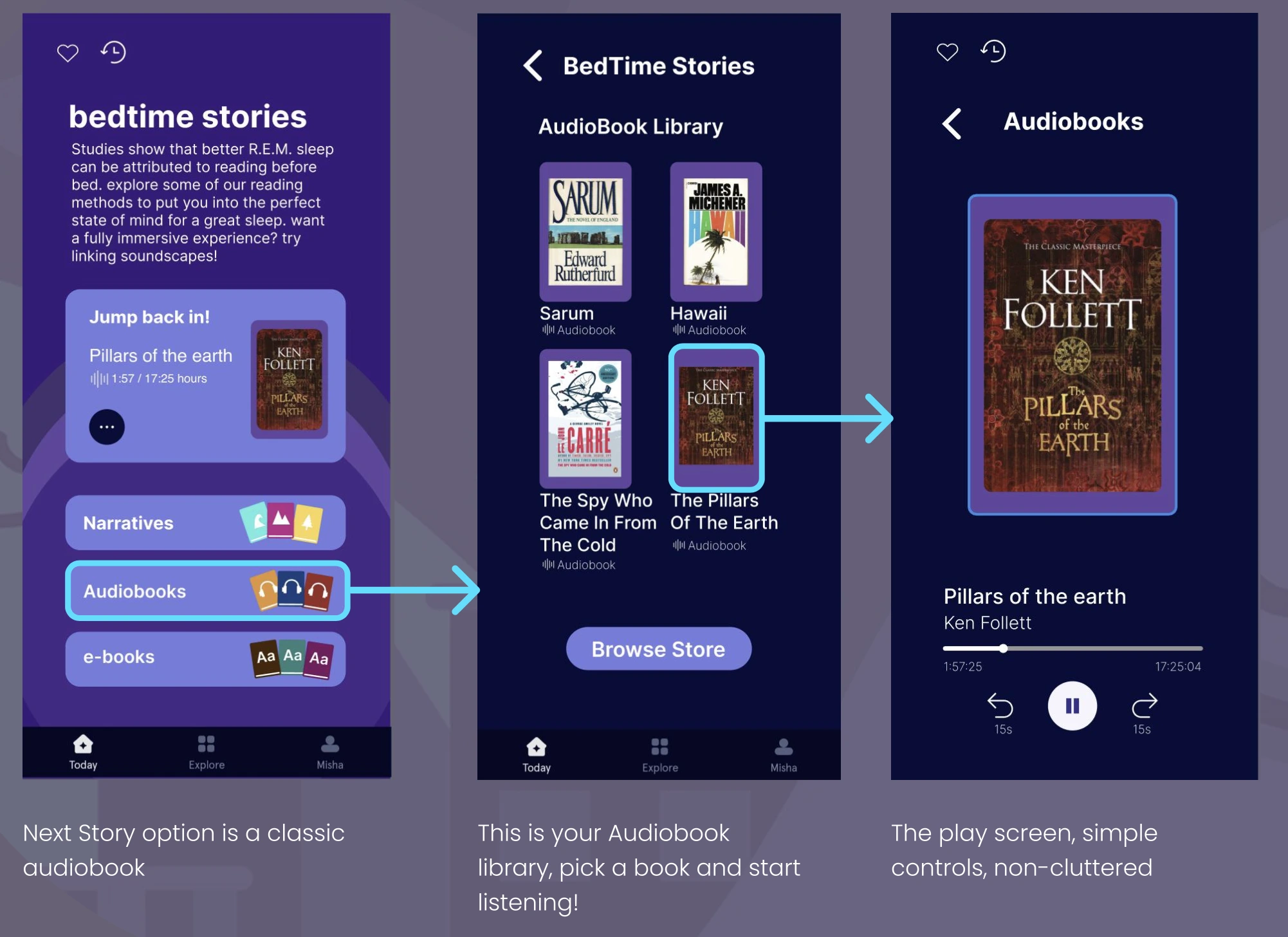
Final concept - Sleep Mood transforms Headspace into a serene night-time companion
Outcomes & Learnings
The concept ended at the design phase (no prototype testing). Peer feedback validated sleep as a strategic expansion for retention. Learnings: user empathy improves ideation, collaborative research deepens understanding, and speculative features benefit from human-centered storytelling. Future work: lo-fi prototyping and usability testing.